How to choose a dropshipping wholesaler and connect it to your store
Your wholesaler is the most important decision you make before launching a dropshipping store — m...
.webp) Kamil Zawadzki
Managing Partner
Kamil Zawadzki
Managing Partner

The United Kingdom sits outside the EU's VAT OSS system, so a store that serves Germany or the Netherlands will not enter the British market unchanged. A business from outside the UK registers for UK VAT from its first sale, and non-excise consignments up to £135 are settled at checkout.
The guide moves in order through legal form, VAT and customs after Brexit, wholesalers, payments, returns and the store platform. We write it from the angle of selling Polish products, because these are the stores we build. The German market has its own guide — the British market works differently, so it gets its own.
With deciding who formally sells — because you can sell into the UK from a Polish company, and you can register a British one. Both routes are legal; they differ in tax and logistics.
A Polish company selling to UK consumers acts as a non-established taxable person: it registers for UK VAT from the first sale, with no threshold at all. The £90,000 annual threshold you will read about in many guides applies only to UK-established businesses — it does not cover a company based in Poland.
A UK Ltd costs £100 to register online and is usually incorporated within 24 hours. It needs a UK registered office address and British accounting, so make that call with an accountant who knows both systems.
The third option is a marketplace: when the sale is facilitated by a marketplace platform, for consignments up to £135 the marketplace accounts for the VAT as the deemed supplier, not you. Convenient at the start — in exchange you hand over commission and the customer relationship.
Simply: a consignment worth up to £135, sold directly to a consumer in the UK, has UK VAT charged at the point of sale — in your store, at the standard 20% rate. You need a UK VAT registration for that, and the customer pays nothing extra on delivery.
Above £135, normal import rules return: import VAT and any customs duty are collected at the border. In practice this is a design decision: keep the basket under the threshold, push the settlement onto the customer (a poor buying experience and abandoned parcels), or move to UK-held stock.
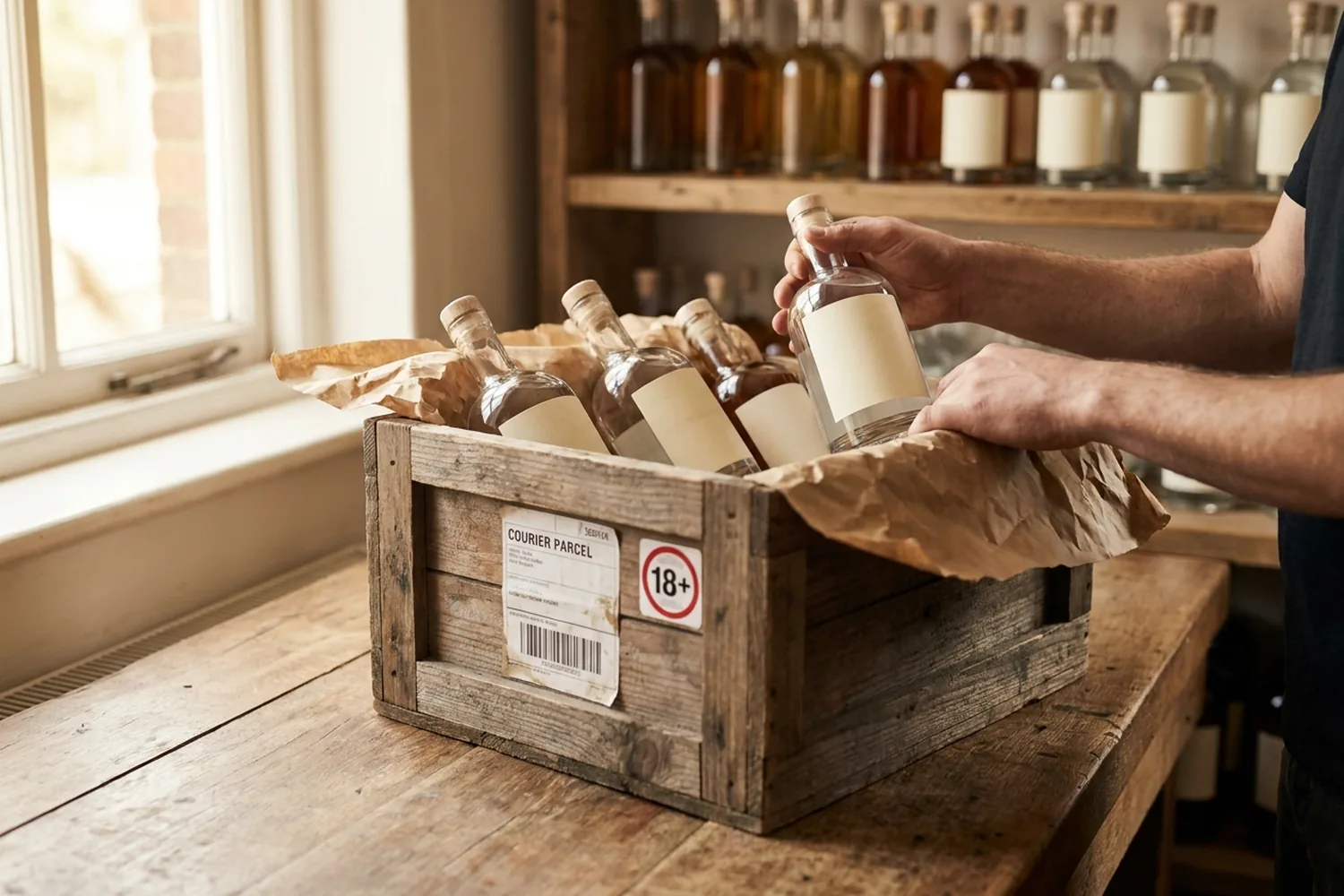
Two exceptions few people remember. The consignment value excludes separately itemised transport and insurance. And the big one: the £135 scheme **does not cover excise goods** — alcohol is treated as a full import regardless of value. We cover that end to end in the guide to selling alcohol online in the UK.
Every shipment from Poland to the UK is now an export from the EU and an import into the UK. Moving goods between Great Britain and any other country requires an EORI number, and every batch goes through customs clearance — done yourself, by a customs agent, or by a courier clearing it on your behalf.
Hence two logistics models:
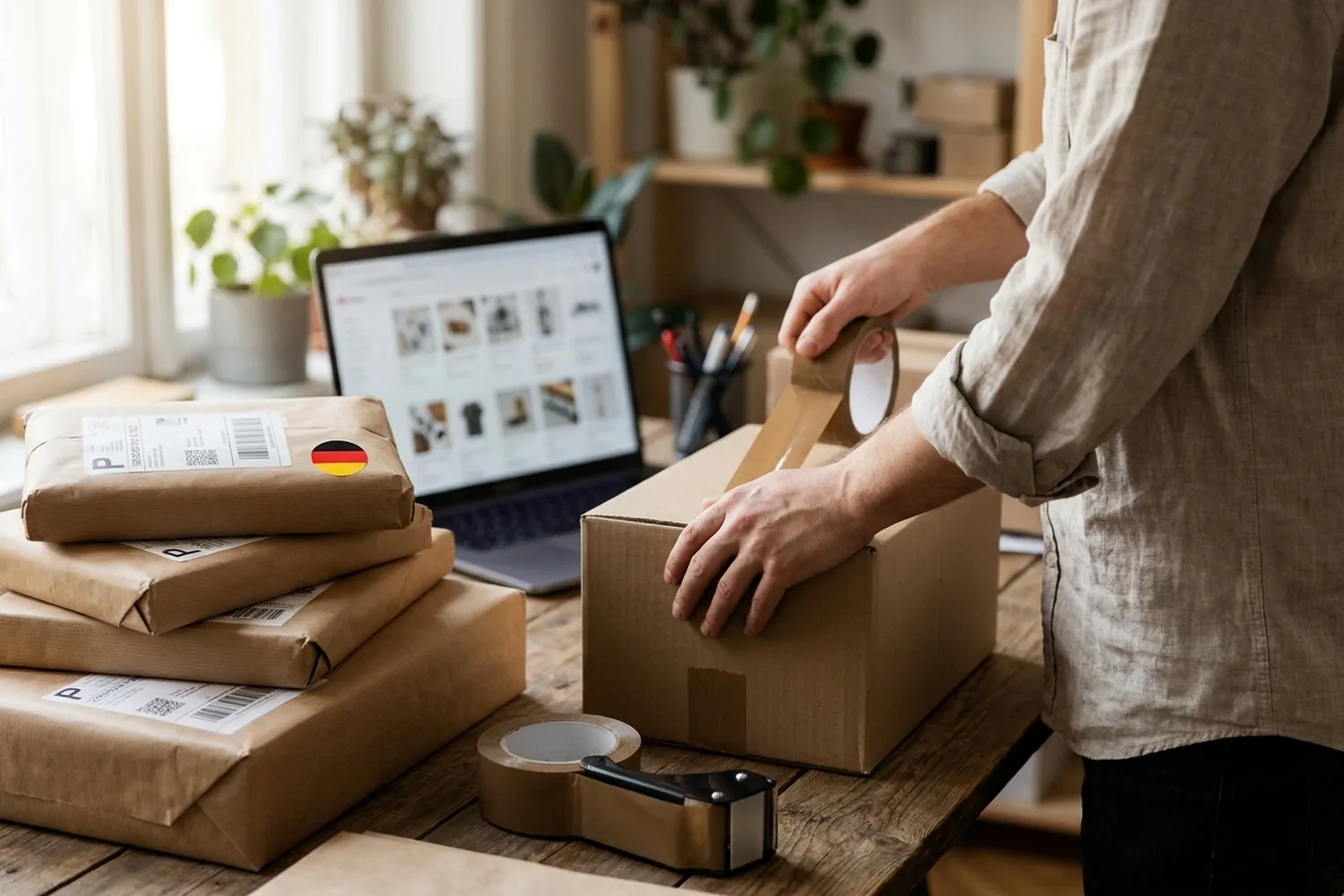
Shipping from Poland per order — simpler to start, but every parcel is its own clearance. With non-excise baskets up to £135 the VAT is already settled at checkout, so the customer pays nothing at the door.
A warehouse or fulfilment partner in the UK — goods travel in bulk and clear customs once when you stock up, domestic delivery times and easier returns, in exchange for warehouse costs and capital frozen in stock.
Whichever model you pick, tell the customer plainly who pays any charges on delivery. A surprise "to pay at the door" is the shortest route to a refused parcel and a bad review.
The model known from the German market works here too: a Polish wholesaler ships, you sell. How to choose a wholesaler and connect it to your store is covered step by step in a separate article — here is the British difference.
In dropshipping to the UK, every parcel is an import. For non-excise goods up to £135 the VAT is settled at your checkout and the parcel crosses the border with nothing to pay; above that, clearance and charges must be agreed with the carrier before the customer is asked to pay them on delivery. Customs data — descriptions, tariff codes, values — has to flow from the wholesaler's system into the shipping documents automatically, because retyping it for dozens of parcels a day does not scale.
We connect a wholesaler on demand, after a technical audit of their system: via API, XML file or FTP. The first catalogue import is included in the implementation; stock sync and order automation are quoted after the audit.
Cards first: debit cards account for about 48% of online purchases and credit cards for about 26%. Then PayPal, used by roughly two thirds of online shoppers, the growing Apple Pay and Google Pay, and Klarna in the deferred-payments segment.
Set up three things first: prices in pounds with no currency conversion at checkout, a gateway like Stripe that covers cards, Apple Pay and Google Pay in one integration, and delivery costs shown before the checkout, not inside it. UK buyers are used to fast checkouts — every extra form field costs abandoned baskets.
Fourteen days to cancel a distance purchase without giving a reason — that is what the Consumer Contracts Regulations 2013 give consumers, counted from the day after delivery. The seller refunds within 14 days of receiving the goods back. Exemptions include perishable and personalised goods.
Operationally, the return address costs the most. A return to Poland means an international shipment for the customer — slow and discouraging. A UK returns point (even a fulfilment partner's address) and a clear returns policy on the site settle the matter before it grows into a complaint.
You enter the British market with the same options as anywhere: a store assembled yourself in a subscription builder, or an implementation shaped around your processes. The difference shows at the specific requirements from this guide: VAT settled at checkout under £135, customs data inside the wholesaler integration, a gateway with Apple Pay, English-language content.
Milio — the e-commerce platform from Webchefs, built as dedicated code — is priced from 10 965 zł net + 1 500 zł/month in the care model (the subscription includes 4 hours of development work a month) or from 28 965 zł net one-off with code ownership (further support billed at 260 zł/h). A language version carries no separate platform fee; preparing the English content is paid work, and AI lowers that cost. Before you sign anything, we show a working demo with your products.
Part of the catalogue plays by separate UK rules. Alcohol means licences, excise duty and age-verified delivery — the whole process, licences and rates included, is in the guide to selling alcohol online in the UK. For food, supplements and cosmetics, confirm the labelling and registration requirements with a specialist before launch, not after the first inspection.
What this guide will not replace: the "Polish company or Ltd" decision made with an accountant who knows both systems, a courier contract with clearance included, or the VAT registration itself. That is specialist work — best done before the first ad campaign, not after it.
We will show you a working demo with your products and prices in pounds before you sign anything. No obligations.
More like this